
Sherbet Gel based on benzocaine 20% Chunky Mango
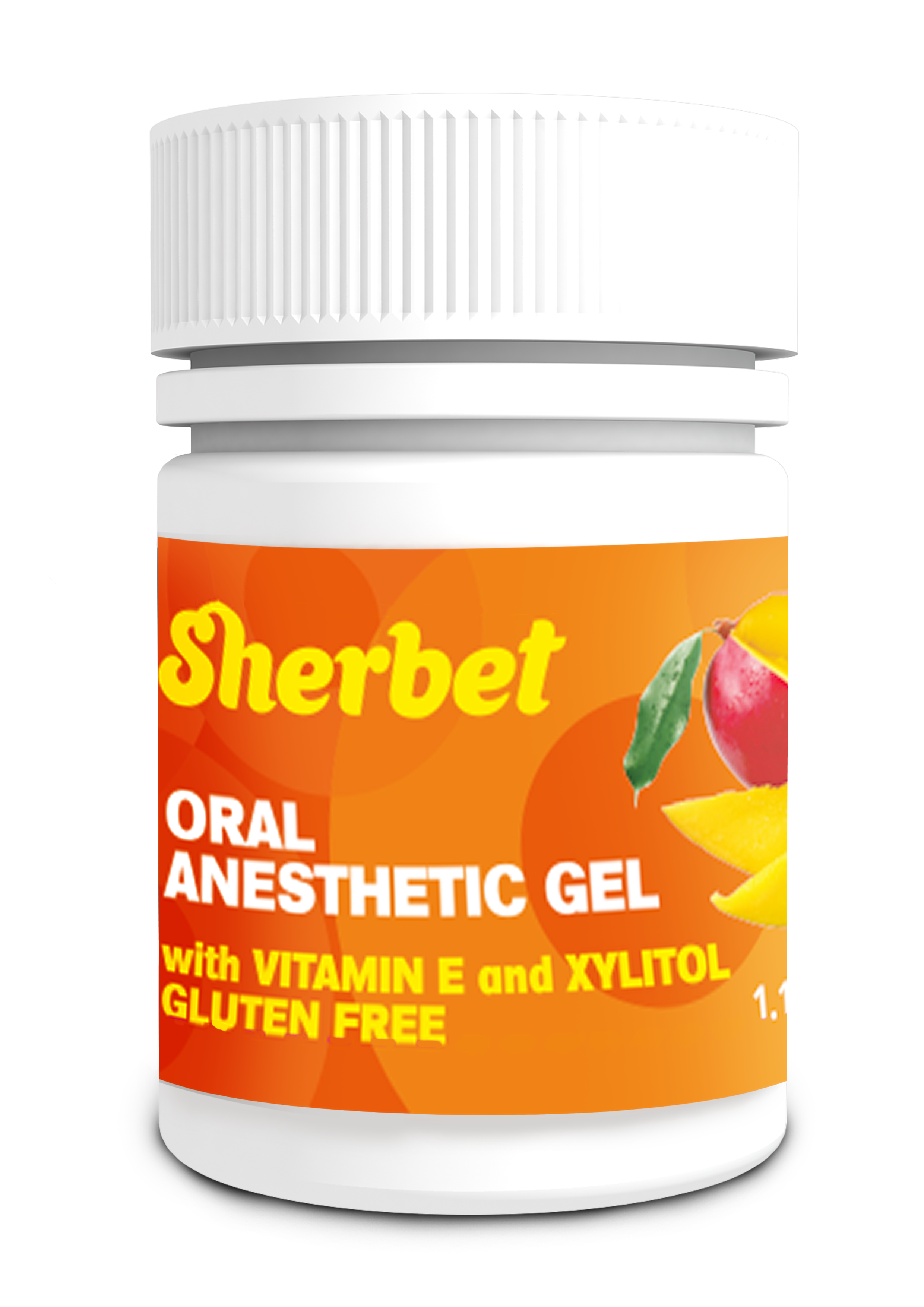
Application anesthetics, presented under the Sherbet brand, provide the dentist with the opportunity to make a painless injection to the patient. Sherbet gels are applied to the soft tissues of the oral mucosa before the injection. In 30-50 seconds after application, you can start the procedure, and, at the same time, during the procedure, the patient practically does not feel pain at the injection site. Application anesthetics provide anesthesia on the mucous membranes to a depth of 2 to 3 mm. This allows the initial penetration of the mucous membrane painlessly. The application of a small amount of anesthetic at the injection site before the needle penetrates is an essential step for the atraumatic injection procedure.
Anesthetic Gels and Sherbet contain 20% benzocaine.
These anesthetics has not only a local effect, but also a "placebo" effect, allowing patients who feel numbness in the oral cavity to believe that subsequent procedures will be painless. Undoubtedly, this gives an advantage to the doctor using Sherbet Anesthetic Gels.
Sherbet anesthetics can also be used to minimize the gag reflex as well as for localized soft tissue treatments. Sherbet application anesthetics are available in a variety of commercial forms with different flavors. Methods of application include the use of cotton swabs, dressings, and subgingival insertion of blunt-tip syringe cannulas.
MECHANISM OF ACTION
Benzocaine reduces the permeability of the cell membrane to Na+ ions, displaces Ca2+ from receptors located on the inner surface of the membrane and blocks the occurrence and conduction of nerve impulses. With topical and oral administration, the absorption of the drug is minimal. When applied to mucous membranes, the effect develops within 1 minute and lasts 15-20 minutes. Long-term studies on animals and humans of potential carcinogenicity, mutagenicity, as well as effects on fertility were not revealed.
Vitamin E, which is part of the composition, contributes to the speedy restoration of the mucous membrane after its damage at the injection site during anesthesia. It also helps to healing the mucous membrane after local procedures that led to its injury.
TOXICITY, RISK/PRECAUTIONS
Benzocaine, the most commonly used local anesthetic, is an ester that is minimally absorbed into the systemic circulation and therefore has a very low toxicity potential. The most commonly used concentrations in dentistry are 20%, which provides adequate local exposure within 30 seconds, but requires a full 2 minutes for the greatest effect. The duration of action is from 5 to 15 minutes.
Allergic reactions to Benzocaine, although rare, are physiologically possible. The likelihood of local reactions is associated with tissue injuries during application, prolonged contact with the mucous membrane and previously undiagnosed hypersensitivity. These reactions are easily stopped by palliative treatment and / or further cessation of exposure to the agent.